

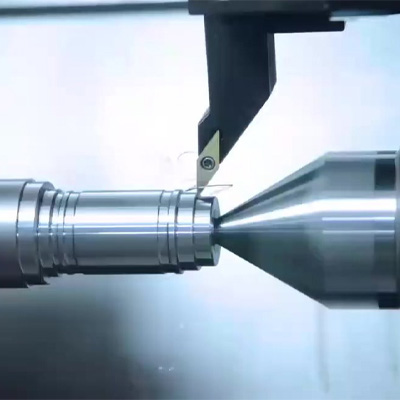

As product designs become more complex, manufacturers increasingly face challenges in machining parts with multiple features, tight tolerances, and high surface quality requirements. CNC turning and milling compound machines offer an effective solution by combining multiple machining processes into a single machine.
Turning and milling compound machines integrate the functions of a CNC lathe and a CNC milling machine. This allows turning, milling, drilling, tapping, and slotting operations to be completed in one setup. By eliminating multiple clamping operations, these machines significantly improve machining accuracy and reduce production time.
One of the most significant advantages of compound machining is precision. Every time a workpiece is removed and re-clamped, there is a risk of positional error. By completing all processes in a single setup, compound machines ensure consistent reference points and superior dimensional accuracy. This is especially important for complex components such as shafts, flanges, housings, and precision mechanical parts.
Efficiency is another major benefit. Compound machines reduce the need for multiple machines and operators, leading to lower labor costs and higher productivity. For example, a CK52Y turning and milling center with Y-axis and powered tools can complete complex off-center machining tasks that would otherwise require several separate processes.
From a production management perspective, compound machines simplify workflow and reduce equipment investment. Instead of purchasing multiple machines, manufacturers can rely on a single multifunctional unit. This not only saves factory space but also simplifies maintenance and training requirements.
Flexibility is also a key advantage. With advanced CNC control systems, operators can quickly switch between different machining programs. This makes compound machines ideal for small-batch production, customized parts, and high-mix manufacturing environments.
In addition, modern turning and milling centers are designed with automation compatibility in mind. They can be integrated with automatic loaders, robotic arms, and smart manufacturing systems. This further enhances productivity and supports the transition toward intelligent manufacturing.
In summary, CNC turning and milling compound machines provide a smart and efficient solution for machining complex parts. They improve accuracy, reduce production time, lower costs, and offer exceptional flexibility. For manufacturers aiming to upgrade their capabilities and remain competitive, compound machining technology is a valuable investment.