

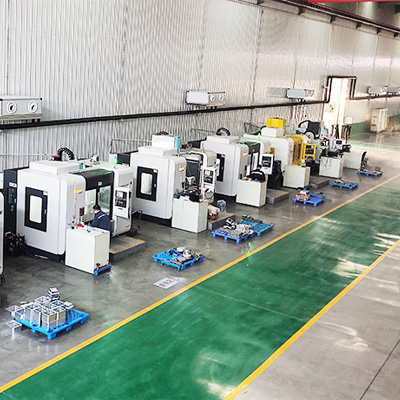

With the rapid development of modern manufacturing, companies are under increasing pressure to improve efficiency, accuracy, and production flexibility. Traditional machining methods often struggle to meet today’s demands for high precision, complex geometries, and short delivery cycles. This is where CNC turning centers play a critical role in transforming manufacturing processes.
CNC turning centers integrate advanced numerical control technology with high-rigidity mechanical structures, allowing manufacturers to produce parts with exceptional accuracy and repeatability. Compared with conventional lathes, CNC turning centers eliminate manual operation errors and significantly reduce setup time. Once a program is created, the machine can continuously produce identical parts with stable quality, making it ideal for both small-batch and mass production.
One of the major advantages of CNC turning centers is their ability to perform multiple operations in a single setup. Turning, facing, grooving, threading, drilling, and even milling can be completed without removing the workpiece. This not only improves machining accuracy but also reduces production time and labor costs. Machines such as the CK46 and CK52 series are designed to handle a wide range of machining tasks efficiently, making them suitable for diverse industries.
Another key benefit is the improvement in machining precision. CNC systems allow for precise control of spindle speed, feed rate, and tool positioning. High-quality spindle systems combined with rigid machine beds ensure stable cutting conditions even during heavy machining. This level of precision is essential for industries such as automotive, aerospace, hydraulic components, and precision hardware manufacturing.
CNC turning centers also contribute to improved production flexibility. By simply changing the program, the same machine can be adapted to produce different parts. This is especially important for manufacturers facing frequent product updates or customized orders. With flexible tooling systems and optional configurations, CNC turning centers can be tailored to specific production requirements.
In addition, modern CNC turning centers emphasize efficiency and energy management. Optimized motor systems, intelligent lubrication, and cooling designs reduce energy consumption while maintaining high performance. This not only lowers operating costs but also supports sustainable manufacturing practices.
In conclusion, CNC turning centers are essential tools for modern manufacturing. They improve efficiency, enhance precision, reduce labor costs, and provide the flexibility needed to compete in today’s fast-changing markets. Investing in reliable CNC turning technology is a strategic decision that helps manufacturers achieve long-term growth and competitiveness.